The Shark Trust works to protect sharks, skates and rays through science, policy and fisheries management.
For this blog post, the Shark Trust has teamed up with Defra to highlight some of the skate species covered by the Southern North Sea and English Channel skates and rays fisheries management plan (FMP).
The plan supports sustainable fisheries while helping protect vulnerable skate species.
Why skates need careful management
Skates and rays grow and reproduce much more slowly than many other types of fish that are sold commercially.
They:
- take a long time to reach breeding age
- have relatively few young
- recover slowly if numbers fall
Because of this, their stocks are more at risk if fishing pressure increases.
Why correct identification matters
Correctly identifying skate species is important for effective management.
Some skates look very similar. When catches are recorded under the wrong name, it makes stock data less reliable.
Better identification means:
- more accurate catch reporting
- better information on stock health
- stronger evidence for future management decisions
Landing obligation – explained
Skates and rays are not covered by England’s landing obligation.
The landing obligation normally requires English fishing vessels to land all catches of quota species, instead of discarding them at sea.
Skates and rays are exempt because many survive when returned to the water. Survival depends on how they are handled and released.
Voluntary handling guidelines
A key action in the FMP is to introduce voluntary handling guidelines for skates and rays.
These guidelines are not legal requirements. They set out best practice to help improve survival and reporting.
The guidelines aim to:
- improve survival when skates are returned to the sea
- support accurate species identification and reporting
- improve evidence for future stock assessments
- help fishermen understand and follow existing rules
These guidelines build on the Shark Trust’s existing resources.
Defra and the Shark Trust will work together to review, update and share guidance with commercial and recreational fishermen.
What the Shark Trust says
Jack Renwick, Fisheries Conservation Officer at the Shark Trust, said:
“Updating our materials supports a key action in this fisheries management plan, one of several commitments required to deliver the full potential of this FMP. It is part of making sure the plan delivers its main aim - sustainable skate and ray fisheries in this area.”
Creature features: skates in this FMP
The following species are often called “rays”, but they are in fact all skates.
Skates lay egg cases, unlike “true rays” who give birth to live young.
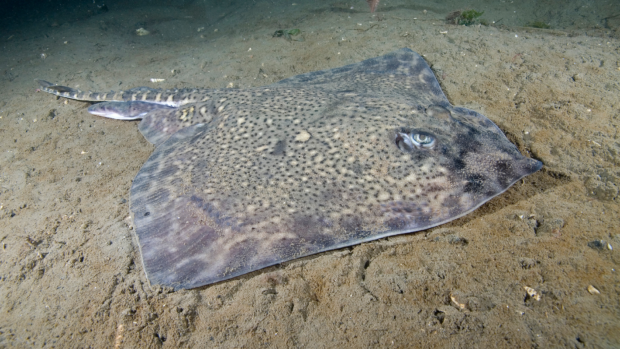
Thornback ray: a familiar UK skate
- Recognised by thorny spines along the back
- Colour varies widely
- Found on sandy and muddy sea beds
- Common in the southern North Sea and English Channel
- Eats shellfish and small fish
- Grows up to about 1.3 metres long
- Can live 12 to15 years
- Females can lay around 150 egg cases each year
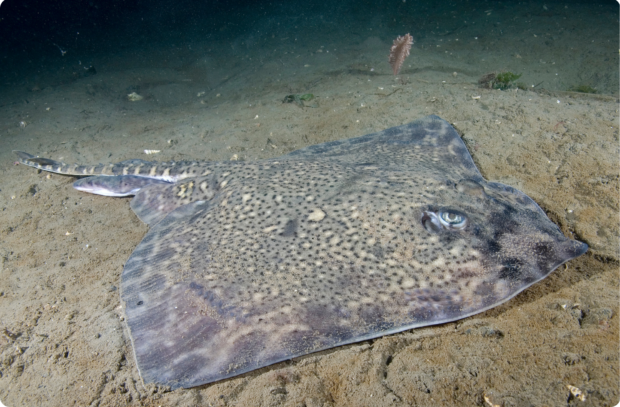
Blonde ray: the sandy seabed specialist
- Large brown skate with clear spot pattern
- Often confused with spotted ray but the blonde ray has spots that reach the edge of the wings
- Can reach about 120 cm in length
- Can live 15 years or more
- Lives on sandy sea beds
- Feeds mainly on crabs and other shellfish
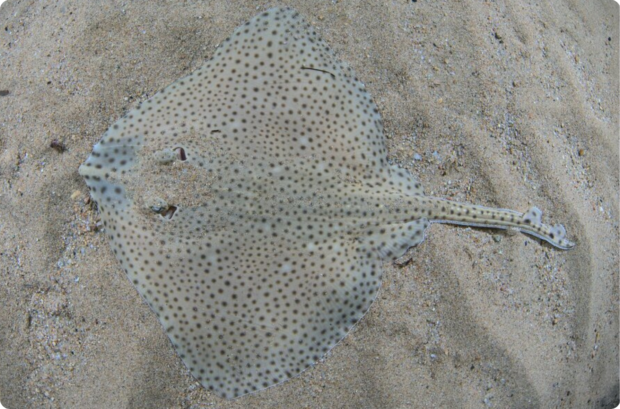
Cuckoo ray: small but widespread
- Smaller skate with clear “eyespot” markings
- Found at a wide range of depths in the Southern North Sea and English Channel
- Lays egg cases further offshore than many other skates
- Often caught in mixed fisheries
- Eats small fish, crabs and worms, playing an important role in the marine food web
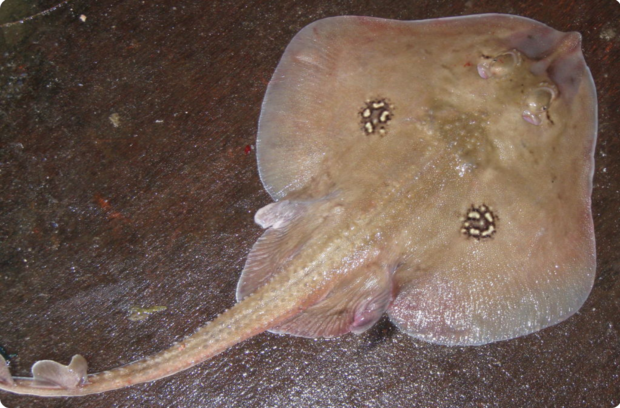
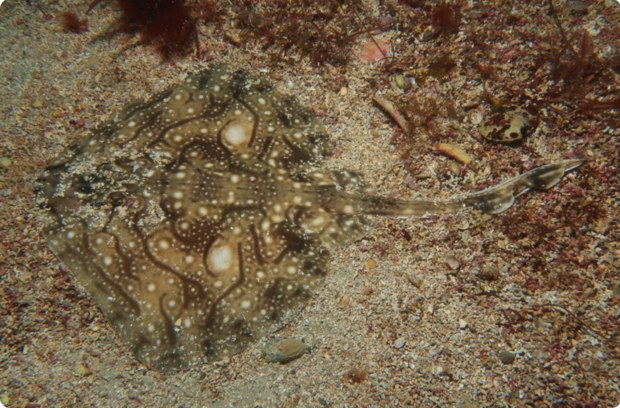
Undulate ray: gentle and wavy
- Identified by dark wavy (undulating) bands and white spots on its back
- Can be confused with small-eyed ray, which has a similar pattern but is lighter in colour
- Slow growing and long lived* making it vulnerable to overfishing
- Feeds on crabs, shrimps and small fish
- Reaches about 1.2 metres in width
*Lifespan still needs confirming (current evidence suggests over 20 years)
Managing fisheries for the long term
The FMP sets out how skates and rays will be managed so stocks stay healthy and fisheries can continue in the long term.
It is based on scientific evidence and balances environmental protection with the needs of fishing communities.
Find out more
- Visit the Shark Trust website for skate and ray resources and the work being done to protect them.
- Read the Southern North Sea and Channel skates and rays FMP on GOV.UK.